 English
 русский
100 Percent Cotton Slippers: A Buyer's Guide to Comfort, Craft, and Quality
Walk into any home-goods aisle and the tag reads the same way: 100 percent cotton slippers. Between that label and the toe, however, more has to be verified than most buyers realise.
From our position as a footwear manufacturer, the honest answer is that cotton labels are only as meaningful as the construction behind them. A slipper can use cotton on the outside, polyester on the inside, and a low-density foam sole that flattens after a few weeks. None of that is visible on the shelf.
The difference between a genuinely integrated cotton slipper and one simply labelled cotton shows up within weeks of daily use.
This guide explains what a true cotton slipper involves, how to assess its fabric and sole, where cotton performs best, and why the factory behind the product deserves as much attention as the material itself.
What "100 Percent Cotton" Actually Covers
In footwear terminology, a 100 percent cotton claim usually refers to the upper fabric that wraps around your foot. It does not include the sole, which needs rubber or synthetic compounds for traction and durability, nor the cushioning layer, which is commonly foam. This is normal industry practice, but it also means the label is only a partial truth unless the lining is described as well.
Three areas determine whether a cotton slipper is truly what it claims to be:
- The upper fabric. A single-layer cotton weave feels light and suits warmer seasons; brushed cotton or cotton fleece adds warmth and softness but dries more slowly.
- The inner lining. Many plush slippers hide a synthetic fibre lining beneath a cotton outer shell. A cotton lining is more breathable and absorbs moisture more predictably, which matters for all-day wear.
- The trims and thread. Binding tape, labels, and laces are often made of polyester even on cotton-rich designs. These small elements influence how the slipper behaves in the wash.
On our production lines, this distinction guides real choices. In the men's simple cotton slippers, for example, we pair a sturdy cotton upper with a flexible TPR sole and a lining that does not trap heat, so the cotton shell works as intended.
Note: When a vendor says "cotton slippers" without specifying the upper, lining, and cushioning separately, ask for the full material breakdown. A detailed material list is usually a better sign than a broad claim.
Why Cotton Makes Sense Indoors
Cotton earns its place in home footwear through three practical properties. First, breathability: cotton allows air to circulate around the foot and reduces the trapped warmth that feeds odour. Second, moisture absorption: cotton absorbs perspiration before it feels damp against the skin. Third, gentleness: the fibre is soft, non-irritating, and generally safe for sensitive skin.
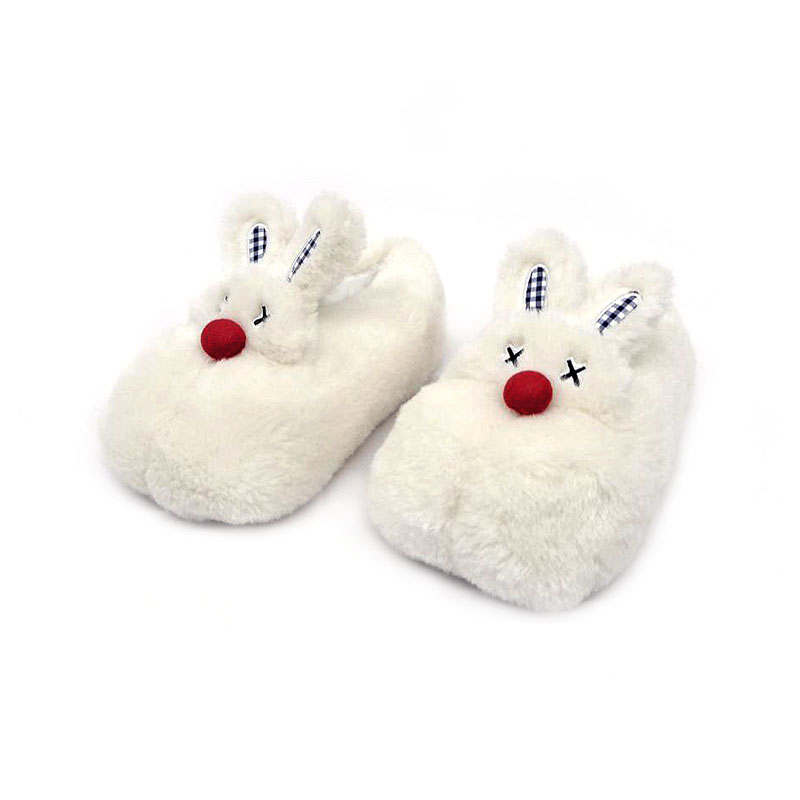
There is a trade-off for each benefit. Cotton dries more slowly than most synthetics, so a single pair worn daily benefits from a rest day between wears. It also compresses with heavy use, which is why fabric weight and lining construction matter more than the cotton label alone. A relaxed, easy-to-wear silhouette, such as our easy-to-wear rabbit slippers, supports the foot in a natural low-stress position while the cotton upper manages moisture through the day.
How to Inspect a Pair Before You Buy
Judging cotton slippers does not require a textile laboratory. A few practical observations at the point of purchase reveal most quality differences.
Fabric weight and density
Cotton fabric is measured in grams per square metre, or gsm. Brushed cotton uppers around 250 gsm feel substantial without turning stiff; visibly thin fabric near the heel usually wears through within a season.
Sole material and tread
TPR and rubber soles grip smooth indoor floors better than basic EVA. Check that the tread covers the whole contact area and that the sole edge is cleanly bonded to the upper with no gaps.
Seam strength
Double stitching around the toe box and heel counter protects the most common failure points. Run the fabric between your fingers near the seams; loose thread and exposed raw edges are warning signs.
Lining honesty
Pull open the shoe and inspect the inside. A cotton lining feels dry and woven, while synthetic pile feels slippery and traps warmth. If the label does not mention the lining, this quick check answers the question.
| Property | 100% Cotton | Polyester | Cotton-Polyester Blend |
|---|---|---|---|
| Breathability | High | Low | Moderate |
| Moisture absorption | High | Low | Moderate |
| Drying speed | Slow | Fast | Medium |
| Skin comfort | Excellent | Varies by finish | Good |
| Shape retention | Softens with wear | Holds structure | Balanced |
Fabric weight tells you how a slipper will age; the sole moulding tells you how it will feel in the first hour.
Warning: A very soft, thin cotton does not automatically mean comfort. Slippers with low fabric weight and no heel counter flatten quickly, leaving a shape that drags at the toes and offers little support.
Where Cotton Slippers Perform Best — and Where They Do Not
No single material wins in every setting, and cotton is no exception. The fibre's strengths line up best with dry, temperature-stable indoor use: living rooms, bedrooms, and kitchen floors. In those conditions, a cotton slipper keeps a balanced foot climate and feels fresher than a synthetic-plush alternative by the end of the day.
Cotton is less suited to wet areas or trips outdoors. Rain, damp bathroom floors, or standing water saturate the fabric quickly, and cotton holds the moisture while it dries slowly. This is a practical limitation rather than a defect. The temperature performance of casual cotton slippers depends as much on lining thickness and fit as on the outer weave, which is why manufacturers produce separate warm-weather and cold-weather versions.
For a closer look at how fabric structure changes comfort across seasons, our article on cotton slipper temperature performance covers the material behaviour in depth.
Watch out: Wearing cotton slippers outside picks up grit that embeds in the weave. The abrasive particles then grind against flooring and accelerate wear on both the sole and the fabric.
Why the Factory Behind the Fabric Matters
Cotton arrives at a factory as woven fabric, but its transformation into a dependable slipper is where quality is won or lost. The cutting direction, stitch density, sole bond, and edge finishing all depend on the factory. The same bolt of cotton can produce a slipper that lasts for years or one that separates within months.
At Cixi Juxin Footwear Co., Ltd., based in Cixi, Ningbo, Zhejiang, these details are managed by more than 200 people across six production lines in a facility close to 9,000 square metres. Since 2001, the company has reached an annual output of around four million pairs, combining development, moulding, sewing, and packing under one roof. BSCI certification, an in-house technical team of over 20 specialists, and regular cooperation with foreign trade partners reflect its export experience.
A facility of this scale can test fabric shrink, sole adhesion, and washing behaviour in ways a small workshop cannot. That capability is a safeguard for buyers: the material claims on a label have been validated on a real production line.
If you are sourcing for a brand or planning a retail programme, the same principles extend beyond cotton. The craftsmanship of cotton slippers — seam density, cutting orientation, sole pressing — is a useful foundation for understanding any home slipper. Our detailed breakdown of cotton slipper craftsmanship walks through each stage.
Cotton carries its role comfortably through the house, and the same production discipline applies to plush silhouettes. Women's winter fuzzy slippers rely on identical seam reinforcement and sole-layering rules even when the outer material is brushed plush rather than woven cotton.
How to Keep Cotton Slippers Comfortable Longer
The care routine decides whether cotton slippers age gracefully or turn stiff and shrunken. Five habits make the difference:
- Wash in cold or lukewarm water on a gentle cycle. Hot water shrinks cotton, especially in brushed finishes.
- Use a mild detergent without bleach. Optical brighteners can permanently alter natural cotton tones.
- Air dry flat in a shaded spot. Machine drying shrinks the fabric and can weaken the sole bond.
- Press out excess water with a towel instead of twisting or wringing the slippers.
- Remove the insole before washing and dry the two parts separately.
Good practice: Own two pairs and rotate them. Cotton regains its loft and moisture balance after a day of airing, which keeps the slippers fresher and extends their useful life.
A genuine 100 percent cotton slipper is a simple product with exacting standards behind it. The label tells you the fibre; the construction tells you how that fibre will feel after thirty wears. Check the upper, the lining, and the sole. Ask where the slippers are made and who is accountable for the stitching. Once you have a pair that fits your climate and routine, care for it the way you would any natural-fibre garment.
Material honesty, sensible construction, and a manufacturer that answers practical questions are the three things that turn "100 percent cotton" from a marketing claim into a comfortable, durable household item.