 English
 русский
A shopper with EU 43 feet orders the largest pair on the page. The slippers arrive, the character head sits proud of the toes, and the heel hangs about 15 mm past the back edge of the sole. Three weeks later the pile under the forefoot is flat, the foam has taken a permanent set, and the pair ends up at the back of a wardrobe. Almost none of that is a quality problem. It is a specification problem.
The short version: buy by inner length in centimetres rather than by the letter on the tag, look for pile density above roughly 320 g/m², keep the weight of each slipper under about 350 g, and insist on a rubber or TPR outsole with a real tread. The rest of this guide explains why those four points matter, how to check them in a listing, and how to keep a good pair soft for more than one winter.
What "Big and Fluffy" Actually Measures
In a slipper factory, "fluffy" is three separate numbers. Pile height is the length of the fibre, quoted in millimetres. Pile density is how much fibre sits in a square metre, quoted in grams. Backing weight is the fabric the fibre is tufted into, and it decides whether the whole upper holds its shape or sags. A style can be 18 mm tall and still feel thin, because tall fibre with low density has nothing to push back against your foot.
Adults are the hardest test for plush footwear. A child's slipper can feel generous in 8 mm pile; the same construction under an adult goes flat within a month, because the load per step is higher and the walking drag is longer. That is why two slippers that look identical in a photograph can feel completely different after a week of wear.
| Specification | Range that works for adults | What a weaker version feels like |
|---|---|---|
| Pile height | 12-18 mm | Under 10 mm turns shiny and flat at the heel and the ball of the foot |
| Pile density | 320-450 g/m² | Under 250 g/m² collapses and does not recover overnight |
| Weight per slipper | 200-350 g | Over 400 g drags, feels heavy and tires the legs on stairs |
| Inner length, backless styles | Foot length plus 10-15 mm | The heel rides above the back edge and rolls off when you climb steps |
| Inner length, closed-back styles | Foot length plus 5-8 mm | Toes press the front seam and the character head deforms |
| Outsole | Rubber or TPR, 4-8 mm, textured tread | A thin fabric sole with glued dots slides on tile and laminate |
If a listing gives only shoe sizes, ask for the inner length in centimetres and the pile weight in grams per square metre. Those two figures settle most arguments about whether a pair is genuinely "big".
Sizing: Measure the Foot, Then Add the Right Allowance
Labels lie, tolerances do not. A style marked XL can have an inner length of 26 cm or 29 cm depending on the factory, the last and the season. Measure in centimetres and compare centimetres.
- Stand with your heel against a wall on a sheet of paper, then mark the tip of the longest toe. Do this late in the day, when feet are at their largest.
- Measure both feet and use the longer one. Many adults differ by 3-8 mm between left and right.
- Add 10-15 mm for backless styles so the heel stays on the sole, and 5-8 mm for closed-back styles.
- Compare that figure with the inner length, not the outsole length. The outsole is normally 20-30 mm longer than the usable space inside.
Why animal heads change the fit
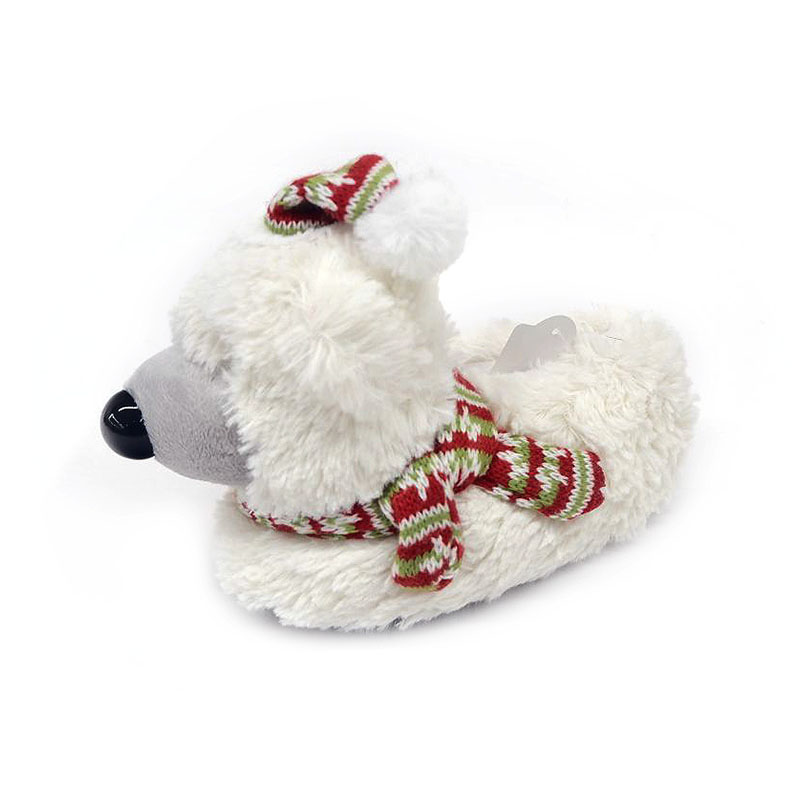
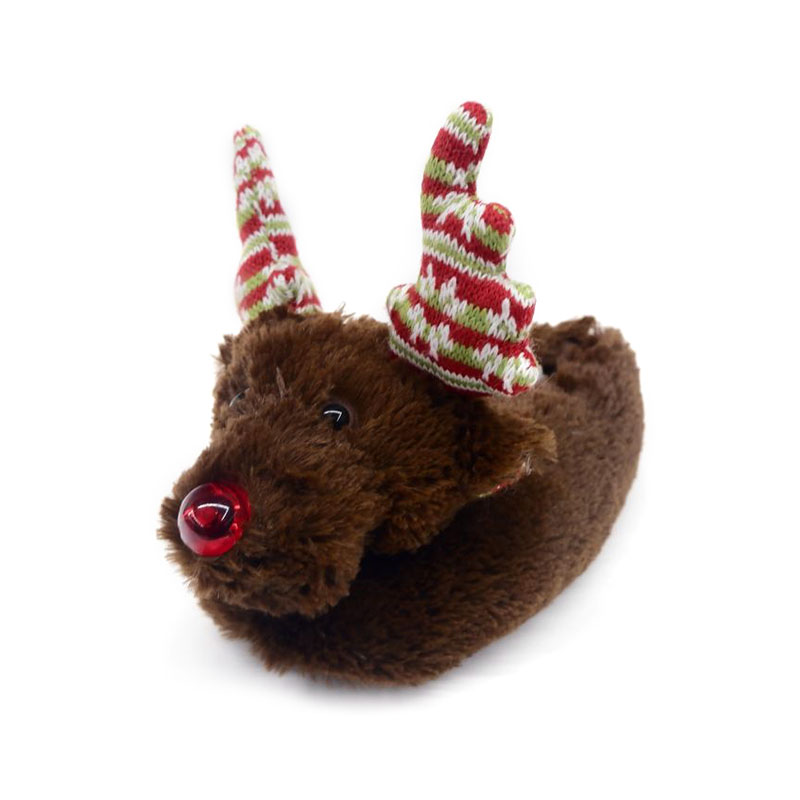
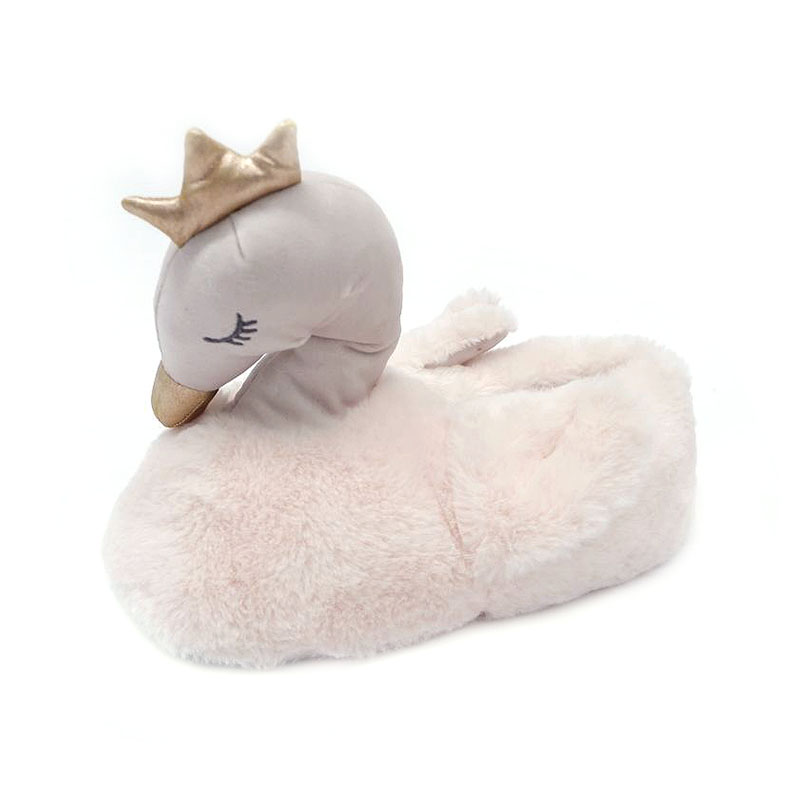
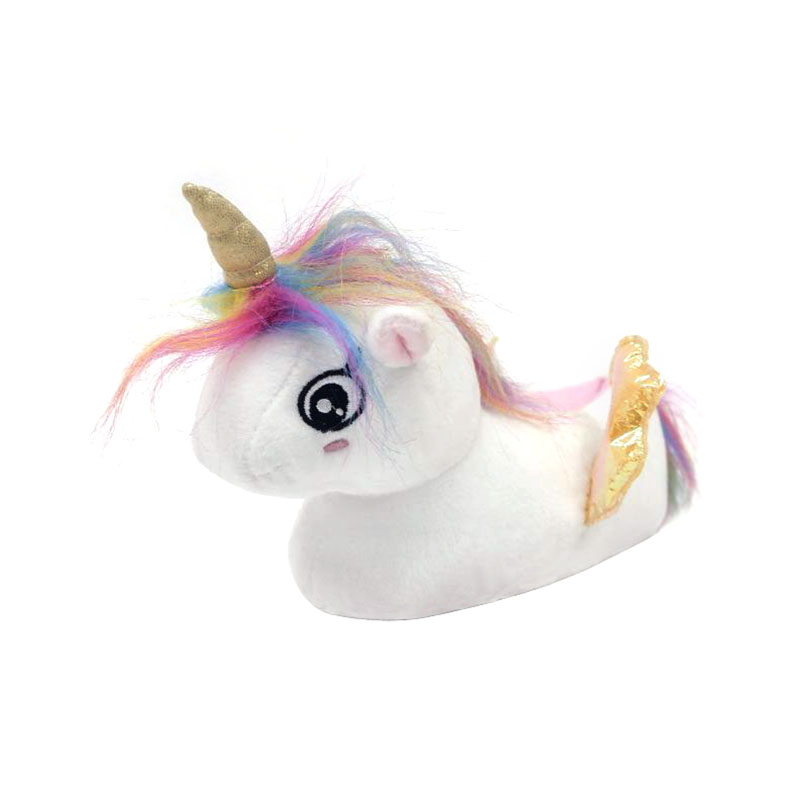
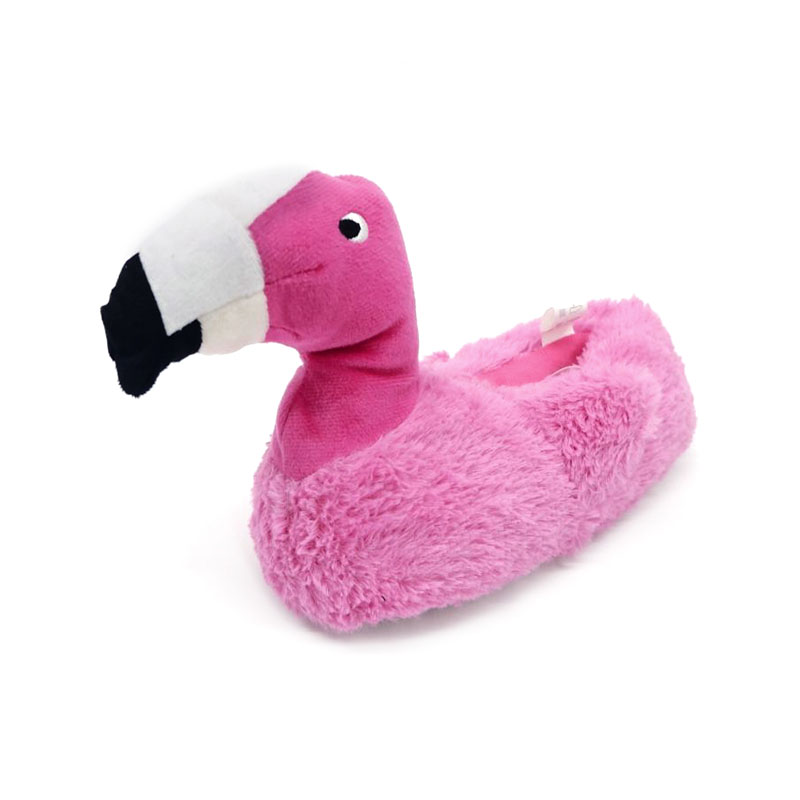
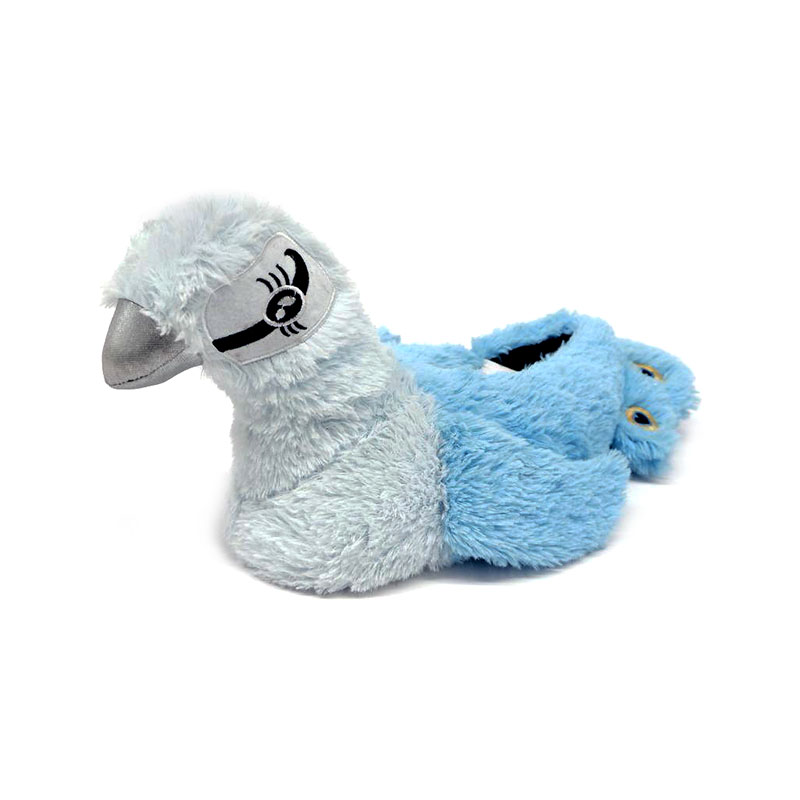
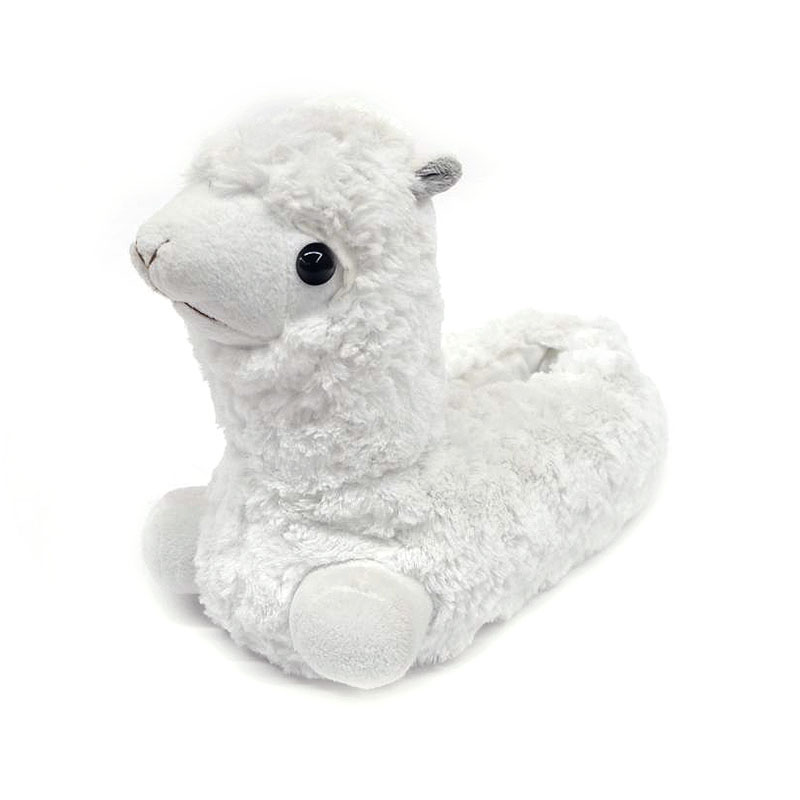
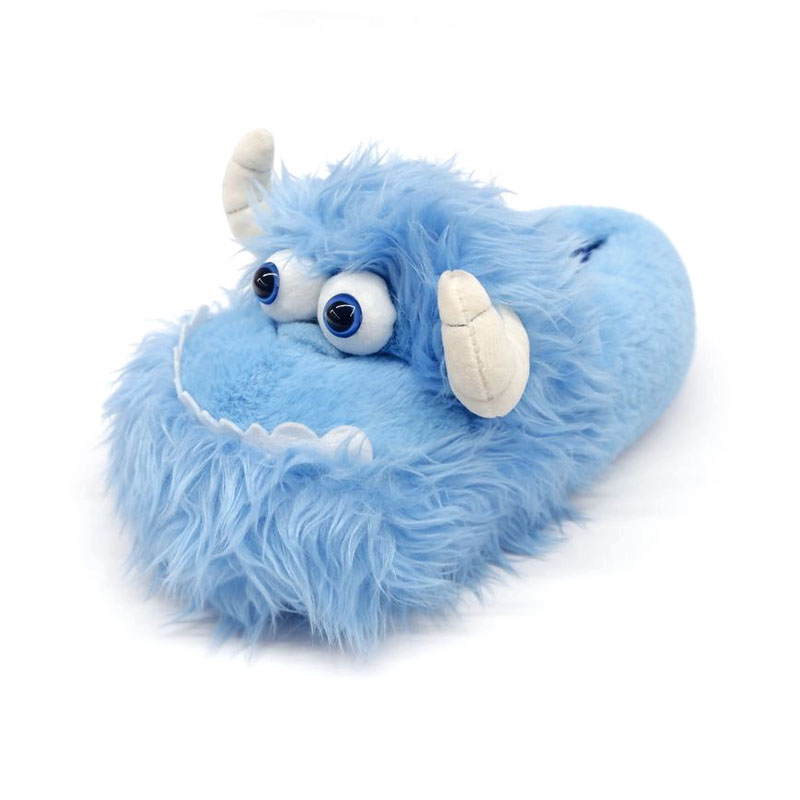
A stuffed toe head is not decoration sitting outside the shoe; it takes volume inside the toe box. On a large character slipper the head can consume 10-20 mm of usable length, so a model with a 28 cm inner length can feel like a 26.5 cm slipper to your toes. If you have long toes, a high instep or you like thick socks, put the plain-front styles on the shortlist first.
Check the inner length of the exact model you want rather than the size chart of the category, because two animal designs from the same family can share a sole and still fit differently at the toe.
The Outsole Decides Whether You Can Wear Them on Stairs
A slipper that fits beautifully and slides on a polished floor is a slipper people stop wearing by February.
The upper gets all the attention, but the outsole decides how much you actually wear a pair. Fabric soles with printed anti-slip dots are fine on carpet and in a bedroom. On glazed tile, laminate and painted stairs they are a compromise, because the dots wear smooth within weeks and the sole has no tread to bite with.
For adult use across a whole house, look for a rubber or TPR outsole that is 4-8 mm thick, with a shallow tread pattern and a small lip at the heel. Check how the sole is attached, too: adults load the bond line far more than children do, and a stitched or cemented-and-stitched edge holds up better than a light glue line.
Caution: backless plush slippers are comfortable to slide into, but they offer very little lateral control. If your home has open stairs, polished stone floors or a wearer who uses a walking aid, choose a closed-back style with a rubber sole, even if it looks less playful.
Heelless designs still earn their place, especially for wide feet or a high instep, because nothing presses on the top of the foot. They simply need a grippier sole than the flat fabric version most listings show.
Warmth Without the Sweat
Warmth in plush footwear comes from trapped air, not from thickness alone. A dense 12 mm pile holds a layer of still air and keeps feet comfortable in a normally heated room of around 20 degrees Celsius. Push the pile to 20 mm and the same room turns the slipper into a small oven: feet sweat, the lining holds the moisture, and the slipper starts to feel cold and smell.
Adults usually wear slippers for two to five hours at a stretch, so moisture management deserves the same attention as insulation. Look for a brushed plush outer with a moisture-wicking inner lining, a removable insole, or an open-heel design that lets air move. If your feet run hot, choose lower pile and a backless cut; if they run cold, prioritise fibre density over fibre height.
Note: for indoor wear longer than two hours, treat breathability and warmth as equal specifications. Tall pile with no lining moves from comfortable to clammy within a single evening.
Keeping the Pile Alive
Plush does not wear out so much as it compresses. The fibre bends, mats and stops standing up, and no amount of washing restores it unless you lift it mechanically.
- Brush the pile with a soft brush after a long day, while the backing is still warm, to lift flattened fibre.
- Hand wash in cool water with mild detergent, or machine wash on the gentlest cycle inside a mesh bag.
- Skip fabric softener. It coats the fibre and makes plush feel slick and flat.
- Air dry flat, away from radiators and direct sun, because heat shrinks the backing and softens the adhesive under the sole.
- Never tumble dry. The drum crushes the pile and attacks the bond line at the same time.
With that routine, most adult plush slippers hold a good appearance through 15-25 washes before the heel and forefoot start to look tired. For a realistic picture of wear over months rather than weeks, this piece on how long plush animal slippers typically last with regular wear covers the signs that a pair is finished rather than merely flattened.
Worth doing: rotate two pairs on alternate days. Pile and foam need roughly a day to recover their loft, so two pairs worn in turn outlast one pair worn daily by a wide margin.
Men's Feet, Wide Feet and Unisex Styles
Adult men's slippers need more than a longer label. An EU 44-46 foot is usually 28-30 cm long, and plenty of unisex plush styles stop at a 27 cm inner length, so check the number before you fall for the design. Toe volume matters as well: a wide forefoot in a character slipper presses the sides of the toe box, which flattens the pile quickly and pushes the foot backwards over the heel.
For wide feet or a high instep, a backless cut with an elasticated strap solves more fit problems than simply going up a size.
If You Are Buying for a Shop or a Private Label
Buying one pair and buying five hundred pairs are different exercises. At volume the questions move to the sizing curve that actually sells in your market, pile density consistency between batches, colourfastness on bright character designs, seam reinforcement at toe and heel, and packing that survives a sea container. Ask for the inner length by size, the pile weight per square metre, and the outsole compound by name rather than by description.
Our own production sits in Cixi, Ningbo, close enough to Ningbo Port to keep export logistics straightforward. We have been making slippers since 2001, with more than 200 staff, six production lines and an annual output of around four million pairs, and we handle both OEM and ODM orders with BSCI certification in place. To see how that side works, start at our slipper factory in Cixi, Ningbo and send through a size range or a reference sample.
Big fluffy slippers for adults are not hard to buy well once you stop shopping by appearance alone. Ask for the inner length in centimetres, check the pile weight, insist on a rubber or TPR outsole if your floors are hard, and plan the care routine before the first wash. Do that, and the pair you choose will still resemble the pair in the photograph when the second winter arrives, rather than living at the back of a cupboard.