 English
 русский
Capybara Slippers: Cute on the Shelf, Serious in the Carton
A buyer’s guide to plush faces, stable soles, honest sizing and the small production details that decide whether a novelty slipper reorders—or returns.
A capybara slipper is sold by a smile and kept by a sole. That is the first conclusion to take from the plush-animal category: the wide muzzle, small ears and calm expression create the initial appeal, but repeated wear depends on pile density, lining, foam and fit. Buyers who approve only the sample photo tend to discover the real cost later—collapsed muzzles, uneven eyes, slippery outsoles and size returns.
The search market for capybara slippers is already crowded with roundups comparing face realism, memory foam, indoor-outdoor use, kids’ versions and non-slip soles. The construction behind those phrases is not new. A capybara shape is an animal motif applied to a familiar plush-slipper platform, so the same factory disciplines that make a rabbit, alpaca, unicorn or shark slipper repeatable also determine whether a capybara program holds up.
Info: Start with a wear trial, not a mood board. A 30-minute walk on tile, laminate and a rug will expose more than another flat-lay image.
The Face Is the Product: Pattern, Pile and Symmetry
If the face reads wrong, the slipper is wrong. Capybara’s appeal is specific: a broad, low muzzle; small rounded ears; close-set eyes; and a relaxed, almost deadpan expression. At sample stage these features can be stitched, embroidered or assembled from faux-fur pieces. At production speed, they can drift. The risk is not a dramatic failure; it is a gradual one—a muzzle that becomes too narrow, eyes that sit too high, or pile brushed in the wrong direction until the expression disappears.
- Lock the pattern scale. Measure muzzle width, eye spacing and ear placement on the approved sample, then keep a physical template at the line.
- Build left and right templates. Symmetry should be checked at the cutting table, not corrected by operators who are trying to keep pace.
- Brush pile away from the muzzle. If the fur covers the nose or eye work, the face loses its capybara character and starts to look like a generic rodent.
- Approve after compression. Let the sample sit under carton weight, then compare the muzzle height, ear shape and pile coverage with the original.
“A cute sample is not a construction standard. It is a question about how the face will look after the carton, the courier and the first wash.”
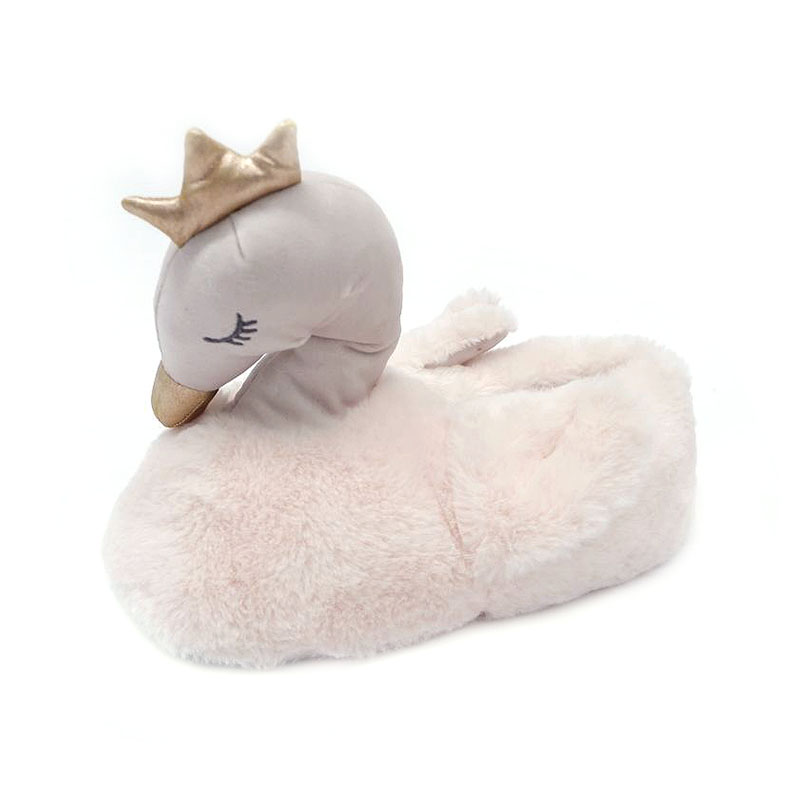
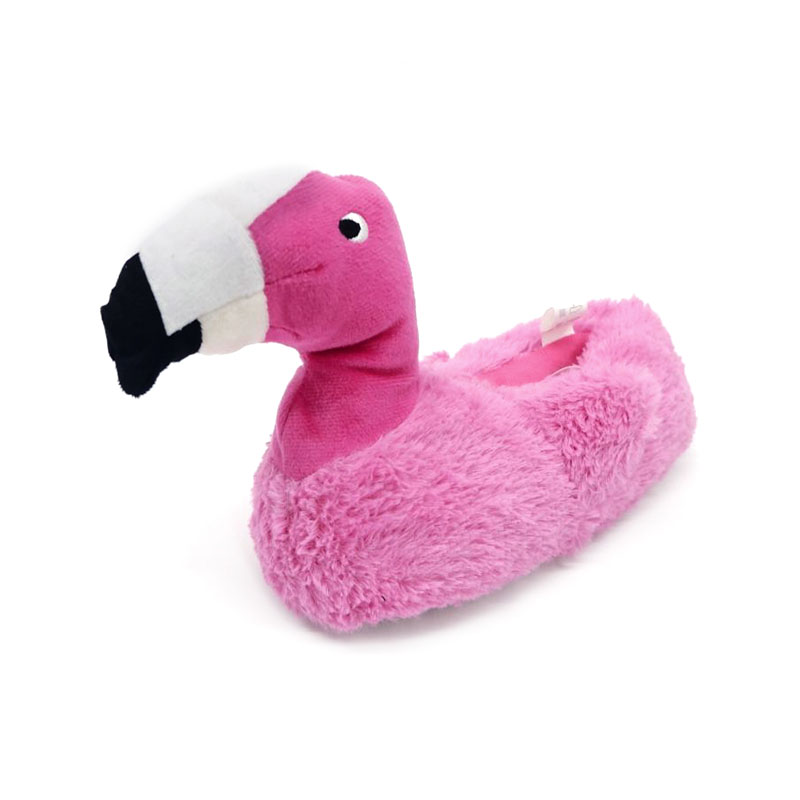
Our women’s plush animal slippers range shows how face-led styles are grouped by wearer rather than by a single animal motif; the same discipline applies to a capybara development brief.
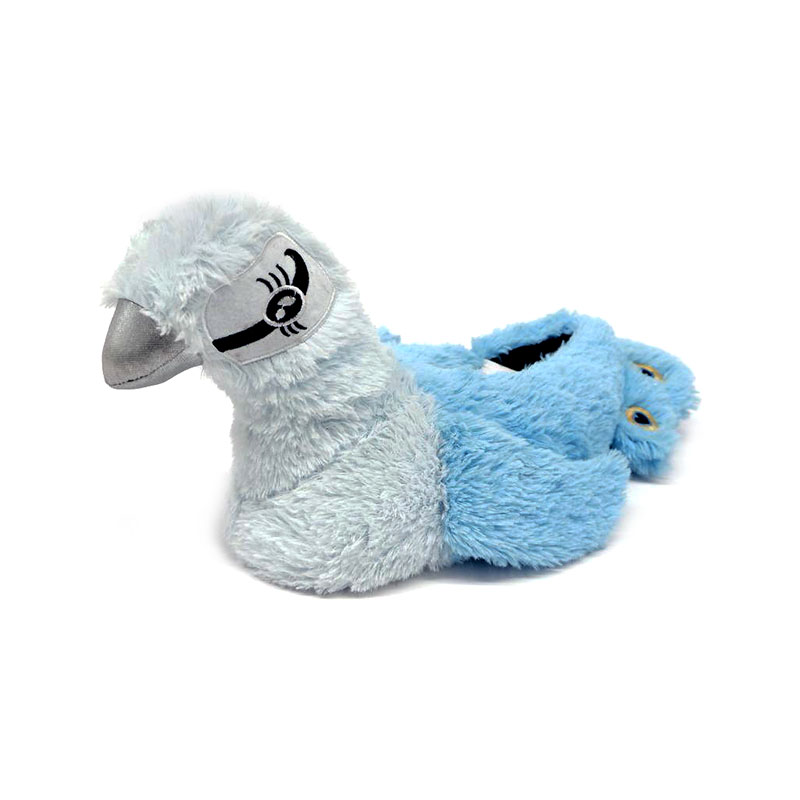
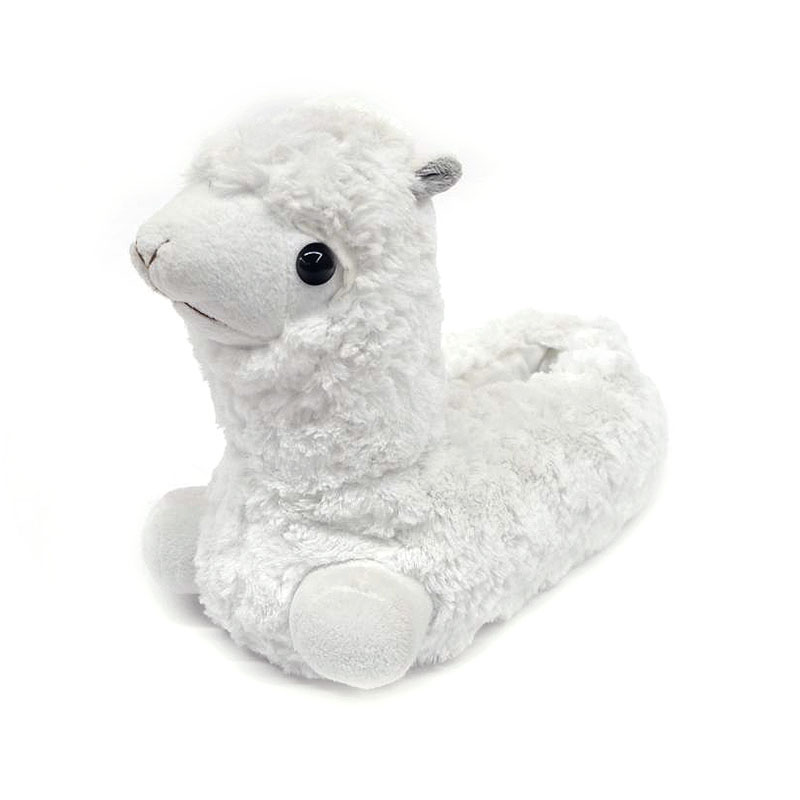
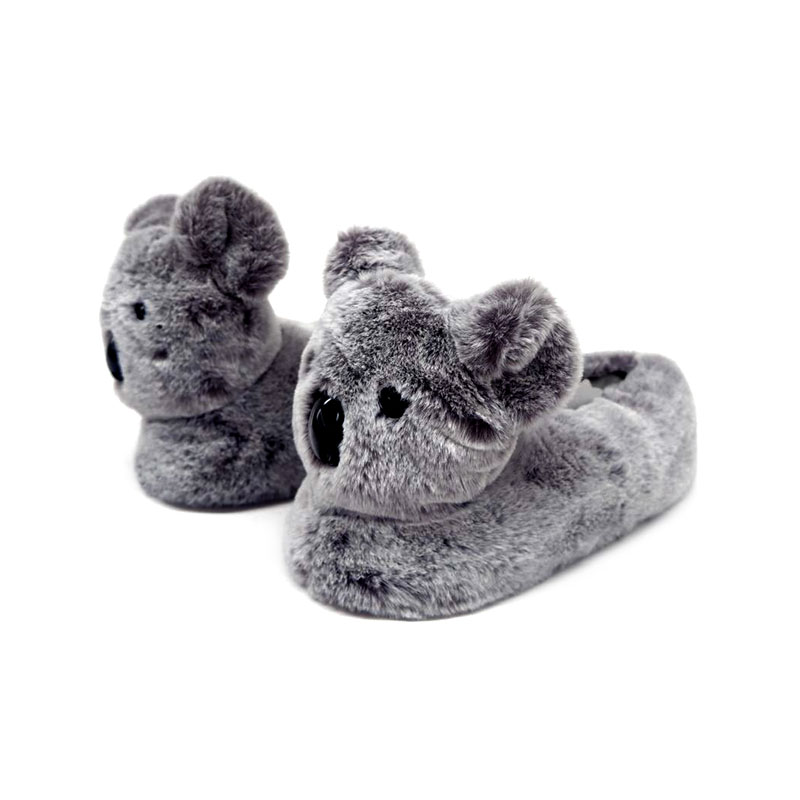
 Women's Plush Animal Slippers OEM/ODM RangeAnimal-themed women's plush slippers in rabbit, koala, turtle, alpaca, flamingo and frog styles, useful for comparing face-led ranges before a capybara brief.View Product →
The Sole and Lining Decide Whether It Is Worn Again
Warmth without moisture control turns a plush slipper into a one-hour shoe. Capybara slippers are usually positioned as indoor house shoes, sometimes with light outdoor use, so the specification should separate three layers: the plush upper, the inner lining and the sole unit. A dense, high-pile upper may photograph beautifully, but if the lining is not breathable the wearer feels damp; if the foam is too soft, the foot rolls inward; if the outsole is hard, the slipper skids on smooth tile.
| Decision area | What to specify | Why it matters | Check at sample stage |
|---|---|---|---|
| Face pattern | Muzzle scale, eye spacing, ear shape, thread color and left-right symmetry | Small pattern drift changes the species and weakens the product’s main selling point | Compare against a measured template, not memory |
| Plush pile | Pile height, backing quality, rub fastness and color consistency | Thin or shedding pile makes the face look worn before the slipper is worn | Brush, rub and tape-test the approved lot |
| Lining and foam | Lining fiber, foam density, moisture behavior and cushioning feel | Too much heat retention creates damp feet; too little support creates fatigue | Wear-test on tile and laminate for at least 30 minutes |
| Sole and fit | Outsole grip, last length, width, heel hold and toe clearance | Most returns come from fit and slip, not from the novelty itself | Measure each size and test on smooth flooring |
| Carton condition | Polybag, compression limit, barcode placement and drop standard | A flattened face arrives as a quality complaint even when the stitching was correct | Pack ten pairs, stack the carton and inspect after 24 hours |
For indoor-focused programs, compare the balance of cushioning and grip before adding the animal face. A stable platform makes the novelty wearable; the reverse is not true.
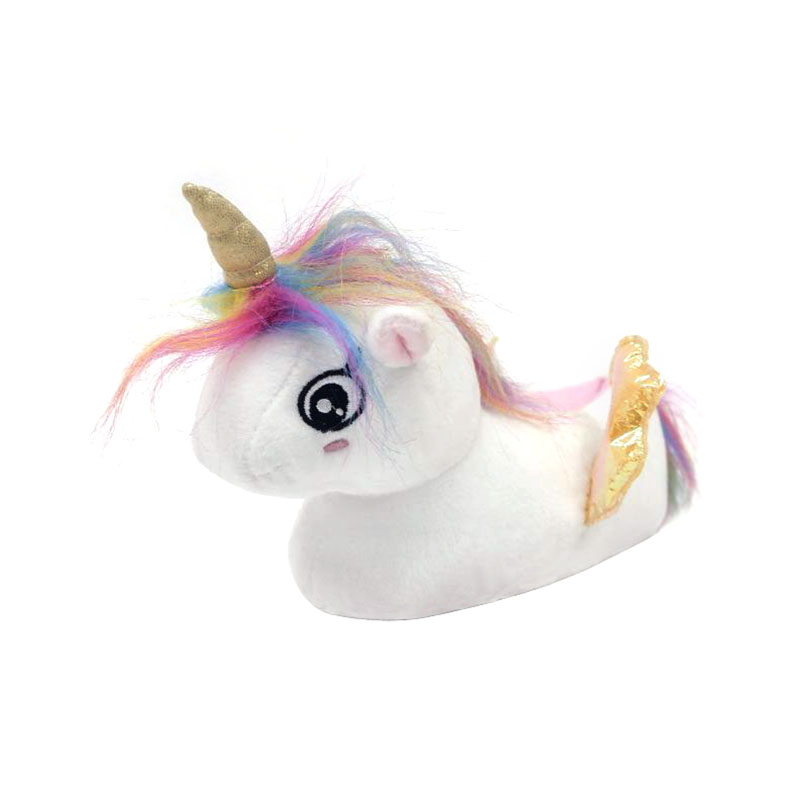
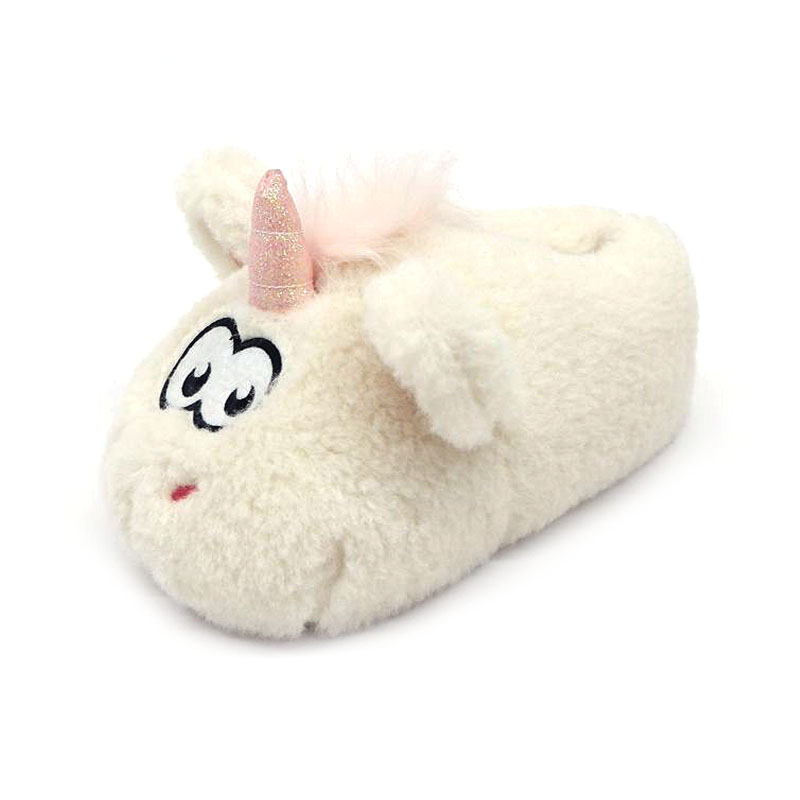
 Custom Indoor Slippers With Animal Plush StylesCustom indoor slippers in cotton, wool, suede or synthetic, with rabbit, unicorn and dinosaur plush styles and anti-slip soles; useful for comparing grip and cushioning.View Product →
Warning: Do not approve a capybara face from a photo only. Carton compression can flatten a muzzle, and a plush pile that looks full on a sample can look patchy after ten pairs are stacked.
Sizing and Age Groups: The Quiet Return Driver
Most returns in plush footwear are not about style. They are about fit and expectation. A capybara slipper is a wide-looking product, which makes customers assume a generous fit; if the last is narrow, the mismatch is immediate. Do not approve S, M and L alone. Approve the measured last length and width for each size, the heel drop and the toe clearance with a representative wearer.
- Unisex styles should be checked on both broader and narrower feet; one fit model can hide a last problem.
- Women’s sizes need a clear relationship between the plush thickness and the internal length, because a thick lining can reduce usable space.
- Kids’ versions need a separate standard for heel hold, easy on-off and sole grip on smooth floors.
Children’s versions need more than a smaller pattern. The heel should stay in place, the opening should be easy for a child to pull on, and the outsole should grip smooth floors. Our children’s slipper sizing notes cover the fit questions that are easy to miss in a sample review.
 OEM/ODM Plush Animal Slippers for KidsChildren's plush animal slippers in rabbit, shark, alpaca and dinosaur styles, with soft upper and easy on/off design; useful for checking heel fit and entry.View Product →
Info: Ask for a wear trial across at least three foot shapes per size group. One fit model can hide a last problem that appears across a broader range.
Wholesale Order Risk: Where Cute Gets Expensive
The commercial risk in capybara slippers sits between the sample and the purchase order. A factory can make one charming pair; a program needs a repeatable face, color-matched pile, consistent sole bonding and a carton that survives transit. Purchase managers should treat the animal face as a controlled component, not a decorative extra.
- Freeze the face pattern and approve color under the final lighting condition, including thread and pile trims.
- Approve materials by lot, not by one swatch; plush color can shift between dye batches even when the code is correct.
- Book product-level testing for the exact materials and colors, not only a factory-level certificate.
- Set carton and compression standards before production, then check the first packed carton on site.
- Agree the AQL, replacement policy and reorder tolerance so a small face drift does not become a full claim.
Certification helps at the factory level, but it does not replace the test report for the exact plush, lining, foam and outsole. As a manufacturer working in plush animal footwear, our development and production team builds approvals around pre-production samples, measured lasts and carton checks rather than catalog photos. The same logic applies if capybara is only one style within a wider animal-slipper range.
A Controlled Kind of Cute
Capybara slippers should be judged in this order: expression, materials, fit, then price. The expression earns the first click; the materials decide comfort; the fit decides whether the customer keeps them; and the price only works when those first three are stable. A buyer who reverses the order usually ends up with a cute sample and a difficult reorder.
Practical standard for a first bulk run: approve the face after compression, approve the last by measured size, test the sole on tile and laminate, and keep the first production run close enough to the sample that no one has to explain the difference.
Success: A good capybara slipper looks relaxed on the shelf and behaves predictably in the carton. That combination is what turns a novelty into a repeatable program.